Esters: Formation and Naming
Locate the ester linkage, form an ester from a C1–C4 alcohol and carboxylic acid, and work backwards from its name or structure.
On this page
An ester name identifies two parts of its structure. Locate the two oxygens, then decide which carbon group supplies the alcohol-derived name and which includes the acid’s carbonyl carbon.
Recognise the ester linkage
An ester contains the linkage -C(= O)-O⁻, with a carbon group attached after the single-bonded oxygen. The condensed notation -COO⁻ includes a carbonyl C=O bond; it does not mean two identical single-bonded oxygens.
Locate both oxygens before reading the name
The carbonyl carbon bonds to CH3 on one side and O–CH2–CH3 on the other. The acid-derived part has two carbons including the carbonyl carbon; the alcohol-derived ethyl group has two carbons.
Scroll across the graph to read all labels.
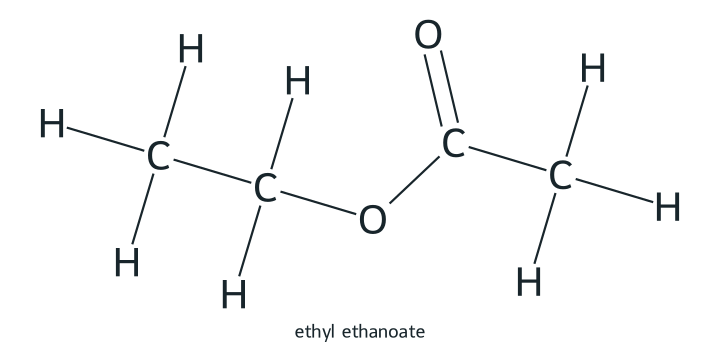
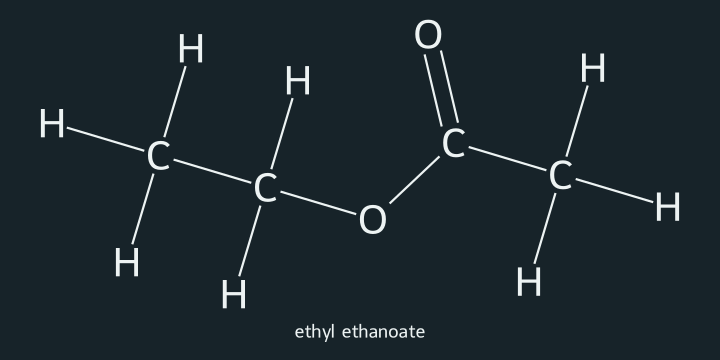
View figure data
| Property | Value |
|---|---|
| Molecular formula | C4H8O2 |
| Condensed structural formula | CH3COOCH2CH3 |
| Acid-derived carbons | 2: CH3 and the carbonyl carbon |
| Alcohol-derived carbons | 2: CH2CH3 |
| Reactants | Ethanoic acid and ethanol |
Esterification
A carboxylic acid and an alcohol can react reversibly to form an ester and water. Heating with a concentrated sulfuric acid catalyst, H₂SO₄, helps the reaction proceed at a useful rate. For ethanoic acid and ethanol:
The product is ethyl ethanoate. The acid loses OH and the alcohol loses H in the simple formula-building account, forming water; the remaining parts join. Every carbon is retained. This is a way to account for the overall change, not the detailed reaction mechanism.
The reversible arrow matters: product formation and the reverse reaction can occur. A catalyst speeds the approach to equilibrium without being used up overall; it does not make a reversible reaction one-way or guarantee complete conversion.
Concentrated sulfuric acid is corrosive, and alcohols are flammable. Ester preparations require the teacher’s risk assessment, eye protection and controlled indirect heating such as a water bath; do not heat an alcohol mixture over a naked flame.
Read the two name parts
The ester name puts the alcohol-derived alkyl group first, followed by the acid-derived alkanoate part. For the end-OH unbranched alcohols used in these examples:
| Alcohol | First name part | Carboxylic acid | Second name part |
|---|---|---|---|
| Methanol | Methyl | Methanoic acid | Methanoate |
| Ethanol | Ethyl | Ethanoic acid | Ethanoate |
| Propan-1-ol | Propyl | Propanoic acid | Propanoate |
| Butan-1-ol | Butyl | Butanoic acid | Butanoate |
Match the two reactants independently: ethanol + propanoic acid gives ethyl propanoate, not propyl ethanoate. The first word’s carbon count belongs to the alcohol group; the second includes the acid’s carbonyl carbon.
If an alcohol’s OH position differs, keep that attachment in the ester structure rather than silently moving it to an end carbon. For example, the supplied name propan-2-yl ethanoate corresponds to CH₃COOCH(CH₃)₂, from propan-2-ol and ethanoic acid.
Build a formula from the reactants
Write the acid-derived part with C=O and the single-bonded O, then attach the alcohol’s carbon group after that O. Keep the ester linkage visible. For methanol and propanoic acid:
The ester is methyl propanoate. It has three acid-derived carbons and one alcohol-derived carbon, for four in total. Compare the atom totals on both sides of the equation: losing water does not lose carbon.
Work backwards from a structure
For CH₃COOCH₂CH₃:
- Locate the carbonyl carbon and the O that is single-bonded to it.
- On the far side of that O, CH₂CH₃ is an ethyl group. The alcohol is ethanol.
- Count the carbons on the carbonyl side, including the carbonyl carbon: CH₃CO⁻ has two. The acid is ethanoic acid.
- Put the alcohol-derived word first: ethyl ethanoate.
For a methanoate, the carbonyl carbon is attached to H rather than another carbon. HCOOCH₃ therefore comes from methanoic acid and methanol. Its acid contributes one carbon, not zero.
A molecular formula alone gives totals and may fit more than one ester structure. Use the linkage and carbon connections to recover the two name parts.
Build, name and reverse
Common misconception 1
Name the ester
Learner name
Assign the alcohol and acid name parts
View solution step by step
Take the alkyl part from the alcohol
Method
Convert methanol to methyl.Reason
The first part of an ester name is derived from the alcohol.Working
methanol → methyl.Join the formula parts
Method
Convert ethanoic acid to ethanoate and place it second.Reason
The acid supplies CH₃COO⁻ and methanol supplies the methyl group attached after oxygen.Working
ester: methyl ethanoate, CH₃COOCH₃.
Examiner practice 2
Build an ester from its reactants
Examination question
Use both reactant name parts and the ester linkage
View solution step by step
Build the name
2 marksMethod
Take propyl from propan-1-ol and butanoate from butanoic acid.Reason
The alcohol supplies the first name part and the acid supplies the second.Working
propyl butanoate.Build the formula
1 markMethod
Join the butanoate side to the propyl group through -COO⁻.Reason
The ester linkage must remain visible in the condensed formula.Working
CH₃CH₂CH₂COOCH₂CH₂CH₃.State the other product
1 markMethod
Name water.Reason
Esterification is a condensation reaction between the acid and alcohol.Working
Other product: H₂O.
Self-mark with the mark scheme
Compare your response with each mark point. Select a point only when your response contains that evidence.
Self-mark both name parts, the linked formula and water.
Guided practice 3
Identify reactants from ester name
Guided reverse naming
Work backwards from both name parts
Hints
Hint 1: first part
Hint 2: second part
View solution step by step
Recover the alcohol
Method
Convert ethyl back to ethanol.Reason
The first ester-name part is the alcohol-derived alkyl group.Working
ethyl → ethanol.Recover the acid and formula
Method
Convert propanoate back to propanoic acid.Reason
The second name part gives CH₃CH₂COO⁻; attach the ethyl group after oxygen.Working
Reactants: ethanol + propanoic acid; ester: CH₃CH₂COOCH₂CH₃.
Try without prompts
Mind stretcher 1: Same formula, different esterExtension
A is CH₃COOCH₂CH₂CH₃ and B is CH₃CH₂COOCH₂CH₃. Name each ester and the alcohol and acid used to make it. Count the atoms in each ester: can the molecular formula alone distinguish A from B? Explain.
Show answer
A is propyl ethanoate, from propan-1-ol and ethanoic acid: three carbons in the alcohol-derived group and two in the acid-derived part. B is ethyl propanoate, from ethanol and propanoic acid: two alcohol-derived and three acid-derived carbons. Both have molecular formula C5H10O2. They are structural isomers, so the molecular formula alone cannot distinguish their different connections.
Mind stretcher 2: Put the name parts in the course’s orderExtension
A learner writes “ethanoic methyl ester” for the ester formed from methanol and ethanoic acid. Give the name using the alkyl-alkanoate pattern and explain where each part comes from.
Show answer
The name is methyl ethanoate. Methanol supplies the methyl group, placed first; ethanoic acid supplies the ethanoate part, placed second.
Mind stretcher 3: Read a methanoate backwardsExtension
The ester HCOOCH₂CH₂CH₃ was formed from an alcohol and a carboxylic acid. Name both reactants and give the ester name.
Show answer
The carbon group after the single-bonded oxygen is propyl, so the alcohol is propan-1-ol. The carbonyl side contains one carbon attached to H, so the acid is methanoic acid. The ester is propyl methanoate.
Bring the parts together
Locate C=O and the single-bonded O. Read the alcohol-derived carbon group for the first word, then count the acid side including its carbonyl carbon for the second. Check atom totals and preserve the linkage when writing the structure. Esterification is reversible and also forms water.
Practise and check
Use the Organic Chemistry topic check to practise and check your understanding.
Syllabus and review details
- SEC G3 Pure Chemistry 2027 · 2027
Content structure and subject content, PDF pages 9–24
Last reviewed: